Family-Friendly Resort Stays on Gangehi
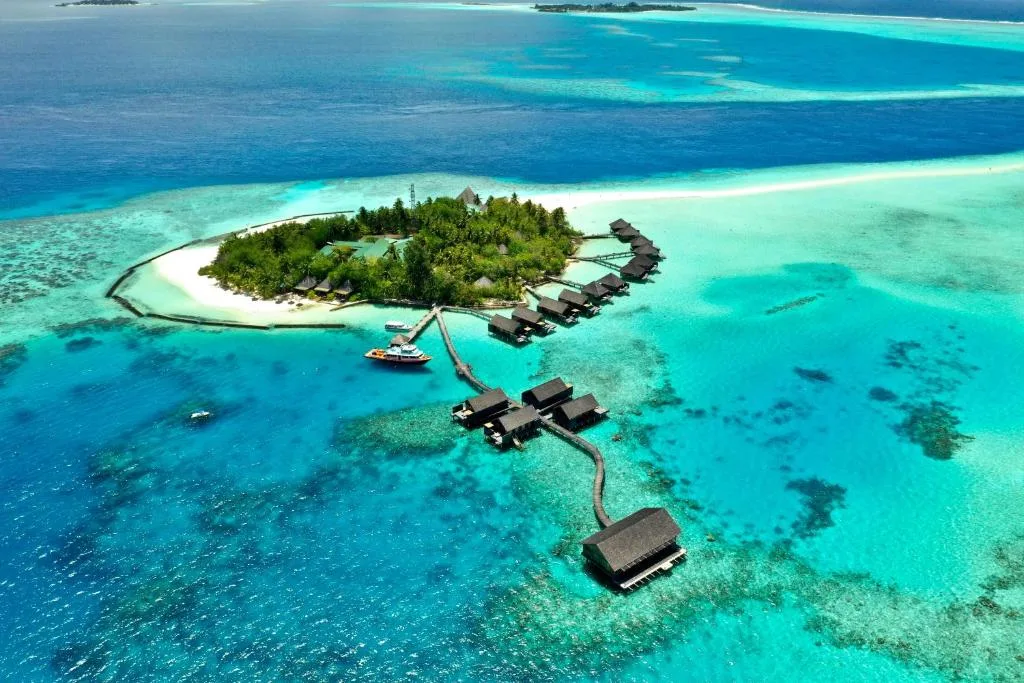
Gangehi Island Resort & Spa positions itself for families more directly than most single-resort islands in North Ari Atoll, mainly through its three room categories: overwater bungalows, beach villas and rooms set in tropical gardens, which give a family more flexibility on space and layout than a resort built around one uniform villa type. The house reef sits close enough to shore for supervised children to snorkel without a boat, and the diving school's beginner-friendly programme extends naturally to teenagers wanting a first certification. Because Gangehi has no speedboat option and depends on a single daylight seaplane transfer, families travelling with young children should plan arrival times around that constraint rather than around a flexible evening option.
Gangehi reads as a calmer, more traditional island than its design-forward neighbour Fesdu: three separate room categories rather than one uniform villa type, a diving school geared toward beginners rather than technical divers, and a spa built around ayurvedic treatment rather than post-dive recovery. That mix gives Gangehi Island Resort & Spa a slower, more domestic rhythm, closer to a family retreat than an active-couples resort. There's still no village or second hotel on the island, so family life here happens entirely within the resort's own footprint, but the footprint itself feels less uniform and more varied than a single-villa-type property.
Family-Friendly · Gangehi in numbers
Where to stay
What makes Gangehi work for families
Gangehi earns a place on a family shortlist less through big kids'-club infrastructure than through a layout that keeps everything close: garden rooms sit further from the water and quieter than overwater bungalows, useful for families wanting a buffer between nap times and pool noise. The diving school at Gangehi Island Resort & Spa runs introductory sessions suited to older children and teenagers, and canoes are available for families to paddle the lagoon together rather than book a separate excursion. The Ginger Spa's presence also means a parent can book a treatment while the other supervises the house reef, without leaving the property.
Room category matters more for families at Gangehi Island Resort & Spa than at resorts with a single villa type: a garden room keeps toddlers further from open water and a busy beach path, while a beach villa suits families who want direct sand access without stairs or a raised walkway. Overwater bungalows work best for families with older children confident around water, since access to the lagoon is immediate but so is the drop beneath the deck. Mentioning ages and specific needs when booking, rather than choosing a category by price alone, tends to make a bigger difference here than at more uniform resorts.
The house reef's shallow, close-to-shore layout at Gangehi suits supervised snorkelling for children better than a boat excursion into North Ari Atoll's deeper channel sites would. Parents can watch from a beach villa's terrace or wade in alongside younger children, and the diving school's staff are generally used to first-time snorkellers of all ages rather than only certified adult divers. That said, conditions should always be checked with the resort before letting children swim independently, since visibility and current can shift with the tide. Late morning, once the sun is higher and the water has settled from the overnight tide, tends to be the easiest window for a first family snorkel.
Canoes give families an activity that doesn't require gear, certification or a booked excursion slot: a parent and child can paddle the lagoon together whenever the water is calm, typically early morning or late afternoon. It's a lower-stakes alternative to snorkelling for younger children who aren't yet comfortable in open water, and it gives older kids a sense of independence within a contained, shallow area close to Gangehi Island Resort & Spa's own beach. Because the canoes are simply available rather than run as a scheduled activity, a family can fit in ten minutes before dinner as easily as a full afternoon session.
Because Gangehi runs on seaplane-only transfers, families should build extra flexibility into arrival day plans, since a delayed international flight can push a seaplane connection to the following morning rather than the same evening. This matters more for families than for couples on a shorter, less schedule-sensitive trip, and it's worth confirming the resort's contingency plan for a missed same-day seaplane slot before travelling to North Ari Atoll with young children. Building in a buffer night near Malé before an early seaplane connection is one way some families avoid the risk entirely.
A traveler's takeTravelling with a ten-year-old, Gangehi Island Resort & Spa's garden room gave us the buffer we wanted from the open water, close enough to walk to the house reef but far enough that nap times weren't interrupted by beach noise. The diving school ran an introductory session for her that felt genuinely beginner-paced, not a scaled-down version of an adult course, and the canoes became our default late-afternoon activity.
Local tips
- 1Book a garden room if travelling with toddlers who need a buffer from open water; save overwater bungalows for families with older, water-confident children.
- 2Ask the diving school specifically about introductory sessions for children or teenagers rather than assuming the programme is adults-only.
- 3Plan arrival day with extra slack, since Gangehi's seaplane-only transfer can push a delayed connection to the next morning.
- 4Use the canoes as a low-pressure water activity for children not yet comfortable snorkelling; mornings and late afternoons are calmest.
- 5Book Ginger Spa time for one parent while the other supervises children at the house reef, rather than trying to coordinate a joint slot.
- 6Confirm supervision expectations at the house reef with the resort, since conditions and current can change with the tide.
Related searches
Family-Friendly · Frequently asked
Yes, particularly with the garden room category, which sits further from open water than overwater bungalows, and a diving school used to working with first-time snorkellers of various ages.